
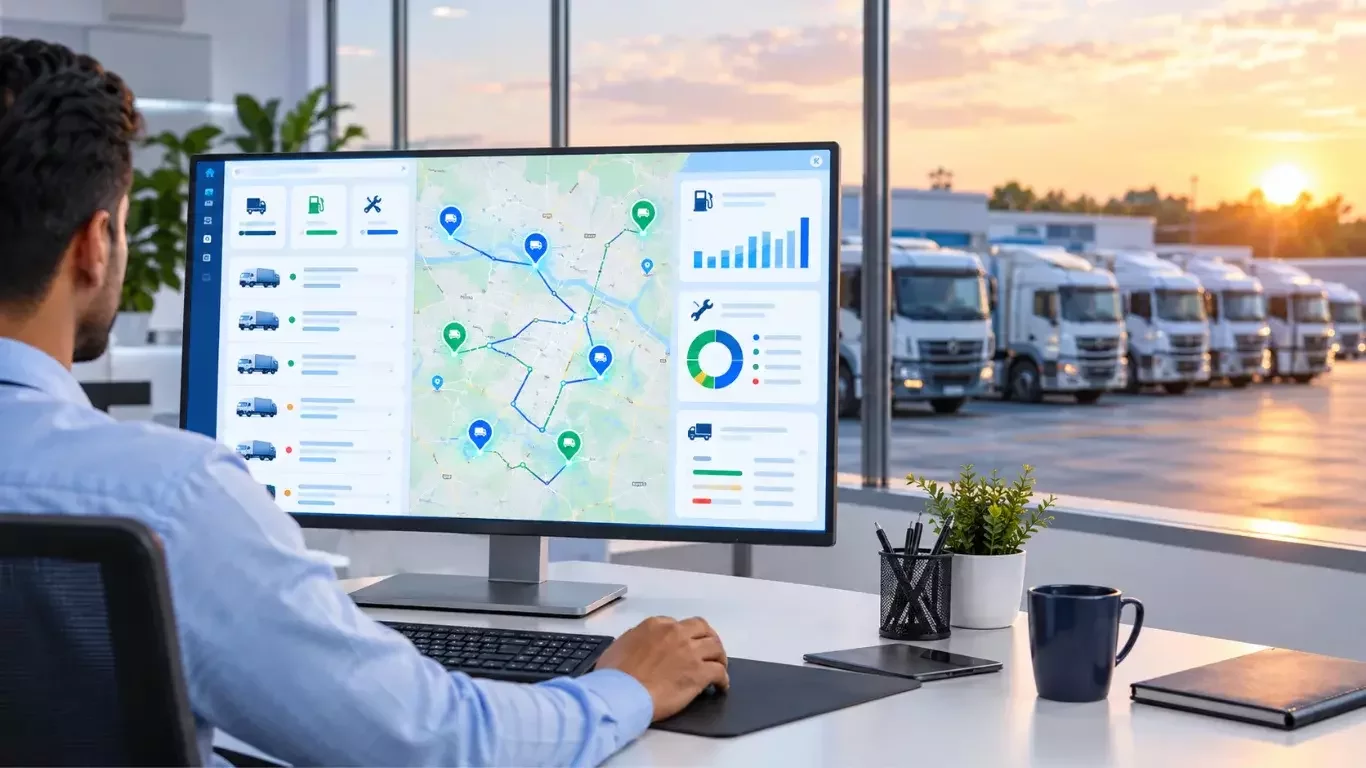
How to Pick One That Won't Waste Your Money
So What Is Fleet Management Software, Really?
Strip away the marketing language and it's fairly simple: fleet management software is a tool that tracks your vehicles and turns that data into something you can act on. Where's the truck right now? When's the next service due. Which driver keeps braking hard on the highway. Is fuel usage matching the distance actually driven?
None of this is new technology — GPS tracking has existed for decades. What's changed is how accessible and affordable it's become. A five-vehicle delivery business can now run the same kind of system that used to be reserved for large logistics companies, without having to install and maintain their own tracking hardware.
Fleet Management System vs. Just... Winging It
A fleet management system pulls location data straight from your vehicles through an API integration with your GPS or telematics provider, so it updates on its own. No one has to remember to log anything, and you don't need to rip out hardware you've already paid for. Compare that to the usual alternative — a driver's logbook, a WhatsApp group, an Excel sheet someone updates "when they get a chance" — and you can guess which one holds up when your fleet grows past ten or twelve vehicles.
We've talked to plenty of operators who swore their manual process was working fine, right up until a vehicle sat idle for two days because nobody flagged the paperwork. That's not a people problem. That's a fleet management system problem — or rather, the lack of one.
The Features Worth Actually Caring About
Vendors love long feature lists. Most of it is filler. Here's what tends to matter in day-to-day use:
- Real-time GPS tracking via API integration with your existing GPS or telematics provider — not a location that's twenty minutes stale.
- Maintenance alerts that fire before something breaks, not after.
- Fuel monitoring that can flag theft, excessive idling, or unusual consumption patterns.
- Driver behaviour scoring — harsh braking, speeding, idle time. This is where insurance premiums and accident rates usually connect.
- A place to store licences, permits, and inspection records so you're not digging through a filing cabinet during an audit.
- Reports that a non-technical person can actually read without a training session.
Worth flagging honestly: this isn't route optimisation software. It won't replan a driver's route on the fly to shave off a few kilometres — it tells you where every vehicle is, in real time, and what condition it's in. For a lot of fleets, that visibility alone is the bigger win; route planning is usually still handled separately, and we'd rather say that upfront than bury it in the fine print.
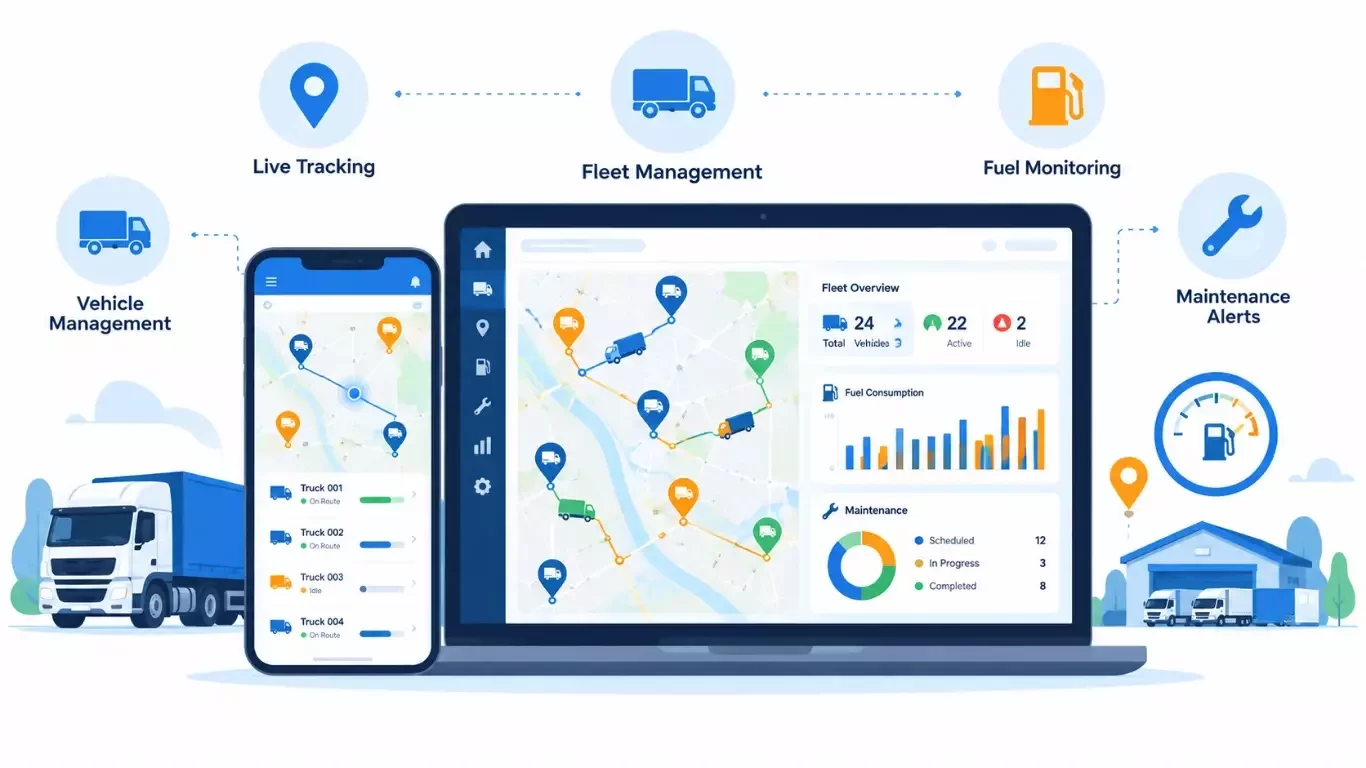
How to Actually Pick the Best Fleet Management Software (Not Just the One With the Best Demo)
Every vendor demo looks great. Clean data, no bugs, every feature working exactly as promised. The real test happens after you've signed the contract and loaded in your actual, messy fleet data. So before you commit to anything calling itself the best fleet management software, push past the pitch and ask the boring questions:
- Does it hold up at double your current fleet size, or does it start creaking?
- How long does onboarding actually take — days, or months of "professional services"?
- Does it integrate with the GPS or telematics hardware you already have, or does it force you to rip and replace?
- Will it talk to your fuel cards or accounting software, or does everything need manual exports?
- Is there a real free trial, or a 15-minute sandbox with fake data?
- Who do you call when something breaks at 11pm — support, or a ticket queue?
This is more or less how we built Fleetongo — around the questions fleet owners kept asking us, not the ones software companies like to be asked.
What You Actually Get Out of Fleet Management Software
Setting aside the sales pitch, here's what fleet owners tend to notice within the first couple of months:
- Lower fuel spend, mostly from cutting excessive idling once you can actually see it happening.
- Fewer breakdowns, because maintenance gets scheduled instead of discovered.
- Fewer accidents, since driver habits are visible instead of anecdotal.
- Less time spent chasing drivers on the phone for status updates.
It's not magic, and it doesn't fix a badly run fleet overnight. But it does remove most of the guesswork, which is where the savings usually come from.
Bottom Line
Fleet management software isn't really an IT purchase — it's a decision about how much you want to keep guessing versus knowing. If you're still running things off a spreadsheet and a driver's memory, it might be time to look at a proper fleet management system. And if you're already comparing vendors, don't just take the demo at face value — load in your own data, ask the annoying questions, and see how it holds up. That's really the only way to find the best fleet management software for your fleet, not someone else's.
