
The Complete Guide for Indian Trucking Fleets
Ask any transporter running even ten trucks what keeps them up at night, and you'll hear the same three words: fuel, fitness, and fines. A truck management system is how Indian fleets are finally getting ahead of all three — and if you're still running your fleet off WhatsApp groups and a diary, this guide will show you exactly what a modern TMS does, how it works, and how to choose one without falling for the wrong sales pitch.
What Is a Truck Management System, Really?
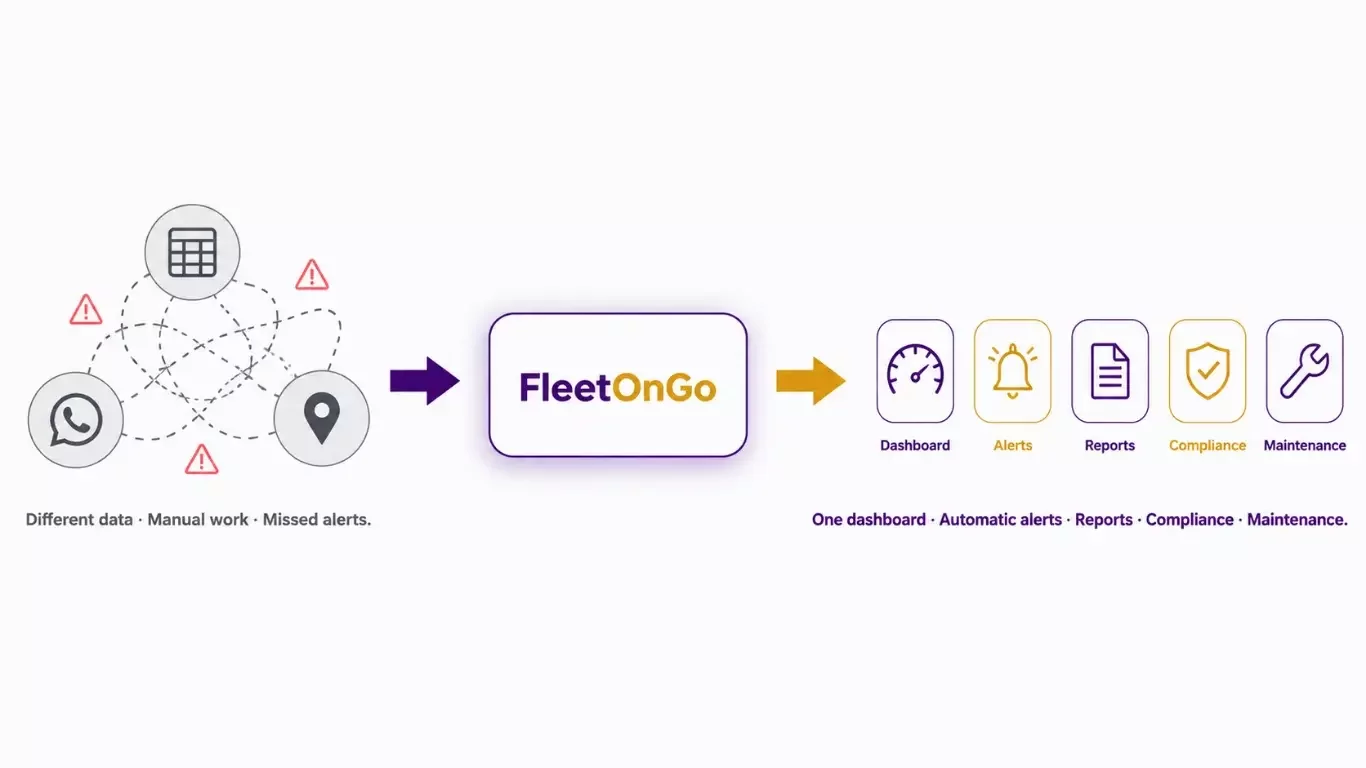
A truck management system (TMS) is software that brings your trucking operation — fuel spend, maintenance schedules, compliance paperwork, billing, and reporting — onto one dashboard. Instead of juggling spreadsheets, WhatsApp updates, and a stack of RC copies, you get one login that shows you what each truck cost you this month, whether its fitness certificate is about to expire, and where your money is actually going.
It's worth being precise about what this means in practice. A TMS is a management and analytics layer — it doesn't have to be the GPS device sitting in the cabin. Good platforms, including FleetOnGo's fleet management software, connect via API to your existing GPS, telematics, or AIS-140 hardware and pull that data into one place alongside fuel, maintenance, and compliance records — so you're not forced to rip out and replace tracking devices you've already paid for.
How a Truck Management System Actually Works
Under the hood, a TMS pulls data from several sources and turns it into decisions:
- Data collection: trip logs, fuel entries, maintenance records, and — where you already run GPS or AIS-140 devices — location and telematics data pulled in via API
- Centralisation: all of it lands on a single dashboard instead of being scattered across apps, paper logs, and phone calls
- Rules and alerts: the system flags anomalies — a fuel entry that looks off, a fitness certificate nearing expiry, a service that's overdue
- Reporting: owners and managers get cost-per-km, per-truck, and per-driver views without manually building an Excel sheet every month
The result is that decisions — which truck to service first, which route is bleeding fuel, which document expires next week — get made from data instead of gut feel.
Why Every Indian Trucking Fleet Needs One in 2026
Fuel Costs Are the Single Biggest Line Item
Industry cost breakdowns for Indian road freight consistently put diesel at roughly 40-60% of total operating cost per truck, which makes even small leaks — theft, poor routes, or worn tyres — expensive at fleet scale. A fuel monitoring layer that flags sudden tank-level drops or unusual refuelling patterns is often the fastest payback item in a TMS rollout.
Regulatory Compliance Keeps Getting Stricter
Vehicle tracking and safety regulations for Indian commercial fleets — including AIS-140 requirements for applicable vehicle categories — have moved from occasional enforcement to routine RTO and fitness-certificate checks. AIS-140-compliant tracking devices help fleets meet applicable state and central regulatory requirements and integrate with approved vehicle tracking platforms where required. A TMS that connects to your certified device via API and keeps compliance documents, fitness certificates, and permits in one place saves you from scrambling before an inspection. You can check current notifications on the MoRTH website and verify approved device categories through ICAT.
Unplanned Downtime and Driver Behaviour Cost More Than You Think
Fleets that move to structured preventive maintenance schedules commonly report 30-40% less unplanned downtime, since small issues get caught before they strand a truck mid-route. On the driving side, U.S. Department of Energy research (Oak Ridge National Laboratory) found aggressive driving — hard braking and rapid acceleration — can cut fuel economy by roughly 10-30%, depending on road conditions. Where a fleet already has telematics or driver-facing devices in place, a TMS can pull that behaviour data in via API and turn it into a simple coaching scorecard.
Types of Truck Management Systems: Cloud vs On-Premise
Cloud-Based (SaaS) | On-Premise |
Low upfront cost, pay monthly or annually | Higher upfront hardware and licensing cost |
Accessible from a phone or laptop, anywhere | Usually restricted to office systems or a VPN |
Vendor handles updates, security, and backups | Your IT team owns updates and maintenance |
Scales easily as your fleet grows | Scaling often means new servers or licences |
Most Indian fleet software today, including cloud-based platforms like FleetOnGo, favours the SaaS model simply because it gets a fleet up and running in days rather than months, with no server room required.
Must-Have Features in a Truck Management System
Feature | Benefit | Business Impact |
Fuel monitoring | Detects theft and unusual consumption | Saves diesel cost, often the fastest ROI |
GPS / AIS-140 integration via API | Pulls in location and compliance data from your existing devices | One dashboard, no hardware replacement needed |
Maintenance scheduling | Reminds you before a service is due | Fewer breakdowns, longer vehicle life |
Compliance & document tracking | Flags expiring permits, fitness certs, insurance | Avoids fines and roadside detentions |
E-way bill & FASTag records | Keeps toll and billing documents organised | Cuts checkpoint delays and paperwork errors |
Analytics dashboard | Shows cost-per-km and per-truck profitability | Data-backed decisions instead of guesswork |
Truck Management System vs Point Solutions
Standalone Tools (GPS app + Excel + WhatsApp) | Integrated Truck Management System |
Location, fuel, and maintenance data live in different apps | Combines them into one dashboard via API integrations |
Compliance tracked manually on paper or spreadsheets | Documents and expiry alerts tracked automatically |
Reports built by hand once a month, if at all | Reports generated on demand from live data |
Reactive — you find out after something goes wrong | Proactive — the system flags issues before they cost you |
Common Mistakes Fleet Owners Make When Adopting a TMS
- Treating it as a one-time IT purchase instead of an ongoing process that needs review and adjustment
- Skipping driver and dispatcher training, so the system gets used at 20% of its capacity
- Choosing a platform that can't integrate via API with GPS or AIS-140 devices already installed
- Not tracking a clear before-and-after baseline, so nobody can prove the ROI later
- Ignoring data security and access controls when multiple staff have logins
A Simple ROI Calculation Example
Every fleet is different, but a rough back-of-envelope calculation helps set expectations. This is illustrative only — always calculate using your own numbers.
Cost Area (50-truck fleet) | Typical Monthly Spend | Potential Monthly Saving* |
Diesel | ₹35-40 lakh | 5-10% |
Unplanned repairs / towing | ₹2-4 lakh | 20-30% |
Fines & compliance penalties | ₹50,000-1 lakh | Most avoidable |
*Illustrative estimates based on industry-reported ranges for fuel and maintenance savings; actual results vary by fleet size, routes, and current practices.
Where the Industry Is Headed: Future Trends
AI-Assisted Predictive Maintenance
Fixed service intervals are starting to feel outdated. Why service every truck on the same 10,000 km schedule when a truck running Delhi-to-Mumbai highway routes wears very differently than one doing stop-start city deliveries? Newer platforms are learning from usage patterns instead — flagging a part likely to fail before it actually does, not after a driver's stranded on the shoulder waiting for a mechanic.
Electric and CNG Truck Fleets
EVs and CNG trucks are quietly showing up in more Indian fleets, especially for shorter urban and last-mile routes. That's forcing management platforms to stretch a bit — tracking a charging cycle isn't the same as tracking a fuel fill-up, and the two need to sit side by side in the same dashboard as fleets go hybrid rather than switching over all at once.
API-First Ecosystems
Nobody wants to be stuck with one vendor's hardware forever. That's really what's driving the shift toward API-first platforms — fleet owners want their TMS to just work with whatever GPS unit, ERP, or accounting tool they're already running, instead of ripping everything out to switch systems. Less lock-in, less pain when you decide to add or swap a tool down the line.
How to Choose the Right Truck Management System for Your Fleet
Match It to Your Fleet Size
A five-truck operation and a five-hundred-truck logistics company don't need the same setup. Smaller fleets should prioritise ease of use and quick onboarding; larger fleets need multi-depot dashboards, role-based access, and strong API support. Either way, look for fleet management software that scales with you instead of forcing a re-platform in two years.
Check Integration, Support, and Real-World Track Record
Can the system integrate via API with your existing GPS, ERP, or accounting software? Does the vendor offer Hindi and regional-language support for your drivers? Ask for references from fleets your own size before you sign anything — a slick demo means nothing if the support team disappears after installation.
Why FleetOnGo?
FleetOnGo was built with one idea in mind: Indian transport businesses shouldn't have to choose between good software and staying loyal to their existing GPS vendor. You keep your hardware. We handle everything that happens with the data after that — fuel, maintenance, compliance, reporting, all in one place.
In practice, that means:
Fast onboarding, built around how Indian fleets actually operate
Mobile access for fleet managers and drivers alike
Fuel and expense monitoring that flags anomalies before they become a pattern
Maintenance reminders and service history, so nothing slips through
Compliance and document tracking — e-way bills and FASTag records included
API integrations with whatever GPS or AIS-140 hardware you already have — no forced replacement
Reporting, analytics, and a support team that actually understands Indian trucking
Getting Started: A Quick Implementation Checklist
Start by auditing your fleet — size, routes, and the one pain point that's costing you the most (fuel, compliance, or maintenance)
Shortlist vendors that can integrate via API with the GPS/AIS-140 hardware you already run
Pilot it on 5-10 vehicles first. Don't roll out to your whole fleet on day one
Get drivers and dispatchers actually trained on the app and its alerts — this is where most rollouts quietly fail
Check the analytics dashboard weekly for the first couple of months. That's when the quick wins show up
Frequently Asked Questions
Ready to see what this looks like for your fleet? Book a free FleetOnGo demo and see how transport companies are cutting fuel costs, automating compliance, staying on top of maintenance, and running their whole fleet from one dashboard.
