
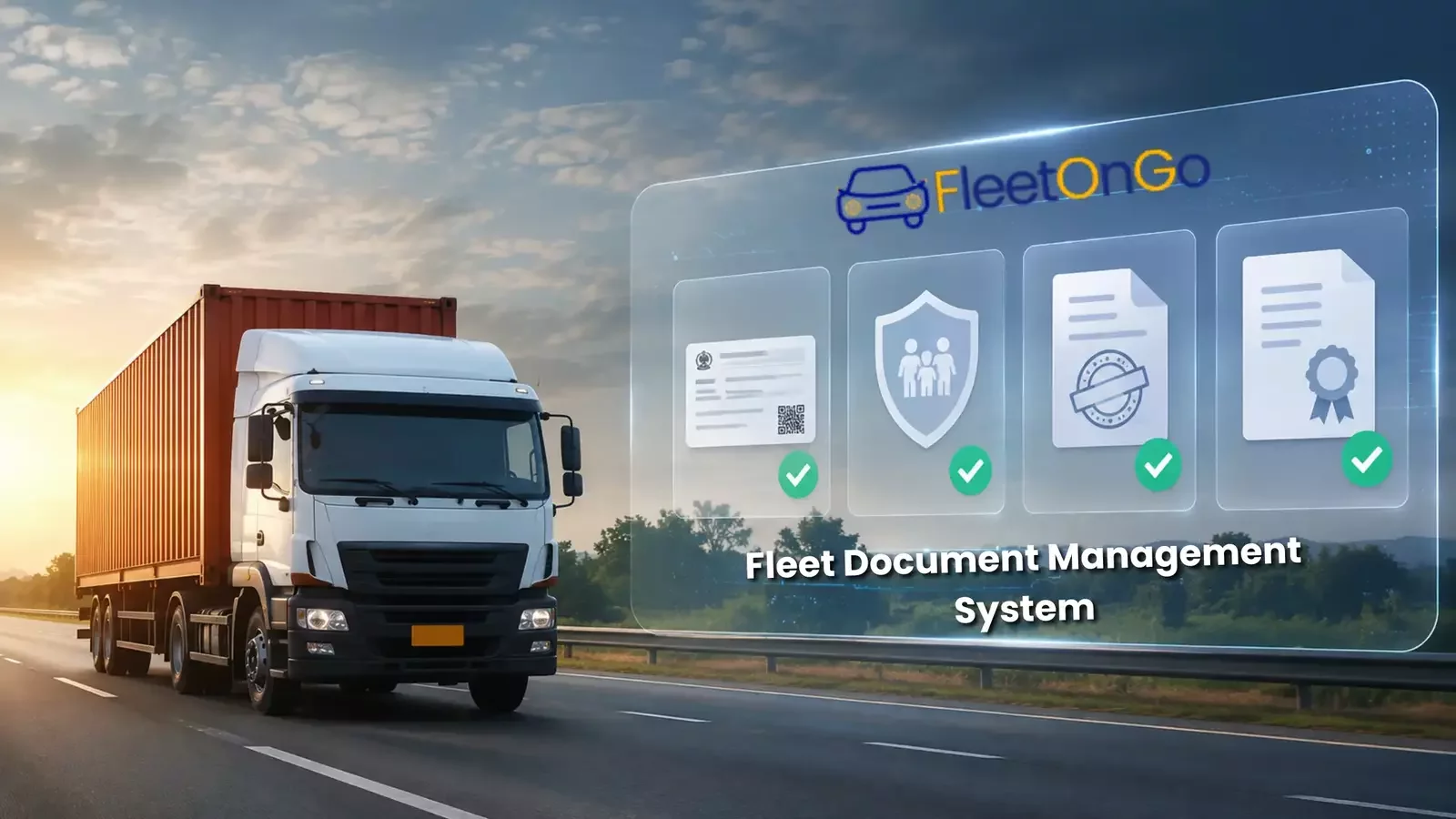
Track RC, Insurance, Permits & Fitness Certificates in One Place
Ask yourself right now: which vehicle in your fleet has an insurance policy expiring this week? If you can't answer without checking three different places, you've found the exact problem a fleet document management system is meant to solve.
Most fleet operators still juggle WhatsApp reminders, spreadsheets, and a drawer full of scanned RC copies that nobody can locate when an RTO officer or client audit asks for them. That system holds up fine — until the day it doesn't, and that day usually ends in a fine, a grounded vehicle, or a client who starts wondering if you're reliable enough to keep the contract.
What Is a Fleet Document Management System?
Why Manual Tracking Breaks Down as Fleets Grow
A fleet of just 10 vehicles can easily carry 40-50 separate expiry dates across RC, insurance, permits, and fitness certificates. Add a growing driver roster on top of that, and you're relying on memory to manage hundreds of dates. One missed renewal takes a vehicle off the road legally — and enterprise clients rarely wait around while you sort out the paperwork.
Documents Every Fleet Needs to Track
Registration Certificate (RC)
Your RC is proof the vehicle is legally registered. An expired RC can mean fines or seizure at a checkpoint — you can check any vehicle's current RC status directly on the government's Parivahan Sewa portal before the deadline catches you off guard.
Insurance Certificate
Whether third-party or comprehensive, a valid insurance certificate is a legal requirement, and it's also what protects your business financially if something goes wrong on the road.
Permits (National & State)
Vehicles crossing state lines need valid national or state permits. A permit that lapses mid-route can stop a loaded truck at a checkpoint, delaying delivery and damaging the trust you've built with a client.
Fitness Certificate (FC)
Issued by the RTO after physical inspection, the FC confirms a vehicle is roadworthy. Commercial vehicles typically need it renewed annually, and operating with an expired FC can attract penalties under the Motor Vehicles Act.
PUC (Pollution Under Control) Certificate
Often the one that slips through the cracks, the PUC certificate gets checked alongside RC and insurance during roadside inspections, and it's also a prerequisite for FC renewal.
What a Centralized System Gets You
Automated Expiry Alerts
Set reminders once and get notified well ahead of any expiry — no sticky notes, no relying on someone's memory.
Lower Compliance Risk
When every document's status is visible on one screen, you spot the gaps before an RTO check or a client audit does.
Faster Audits and Roadside Checks
Pull up a vehicle's complete document history in seconds instead of digging through folders while a driver waits at a checkpoint.
Clear Driver & Vehicle Accountability
Documents linked to specific drivers and vehicles mean you always know exactly who's covered and who isn't.
How FleetOnGo Handles Document Management
FleetOnGo gives you a single dashboard to upload, store, and track RC, insurance, permits, and fitness certificates for every vehicle in your fleet, with automated renewal alerts built in so nothing slips past you.
One Digital Vault for Every Document
Every certificate lives in one centralized, searchable space — accessible from a phone or laptop, whether you're at the yard or out on the road.
Connected to the Rest of Your Fleet Operations
Document tracking isn't siloed — it sits alongside FleetOnGo's fuel monitoring, preventive maintenance scheduling, and driver management tools, so compliance and day-to-day operations live on the same platform instead of in separate apps.
One View for Documents, Maintenance & Fuel
Rather than switching between tools, you see document status next to maintenance schedules and fuel consumption trends — the kind of visibility that turns reactive fleet management into a planned, predictable process. The FleetOnGo mobile app carries that same visibility into your driver's and dispatcher's pockets.
Fleet Document Management System vs. Manual Spreadsheets
- Spreadsheets depend on someone remembering to update them — software sends the reminder automatically.
- A shared Excel file can be edited or deleted by accident — a proper system keeps an audit trail.
- Finding one vehicle's documents in a spreadsheet means scrolling — in a document management system, it's a single search.
- Spreadsheets don't scale past a handful of vehicles — software handles 10 or 1,000 the same way.
How to Choose the Right Fleet Document Management Software
Look for automated expiry alerts, mobile access for drivers and dispatchers, integration with your existing maintenance and fuel tracking tools, and — more important than most buyers realize — an interface simple enough that your office staff will actually use it every day. For the regulatory side, the Ministry of Road Transport and Highways publishes updated rules on registration, permits, and fitness certification worth bookmarking.
At the end of the day, a fleet document management system isn't about adding another piece of software to your workflow — it's about removing the mental load of tracking fifty different dates, so you can focus on running the business instead of chasing paperwork.
